

Popular:
Air Conditioning: A Complete Guide to How Your Home Cooling System Works
- 21 views
- Christopher Pierce
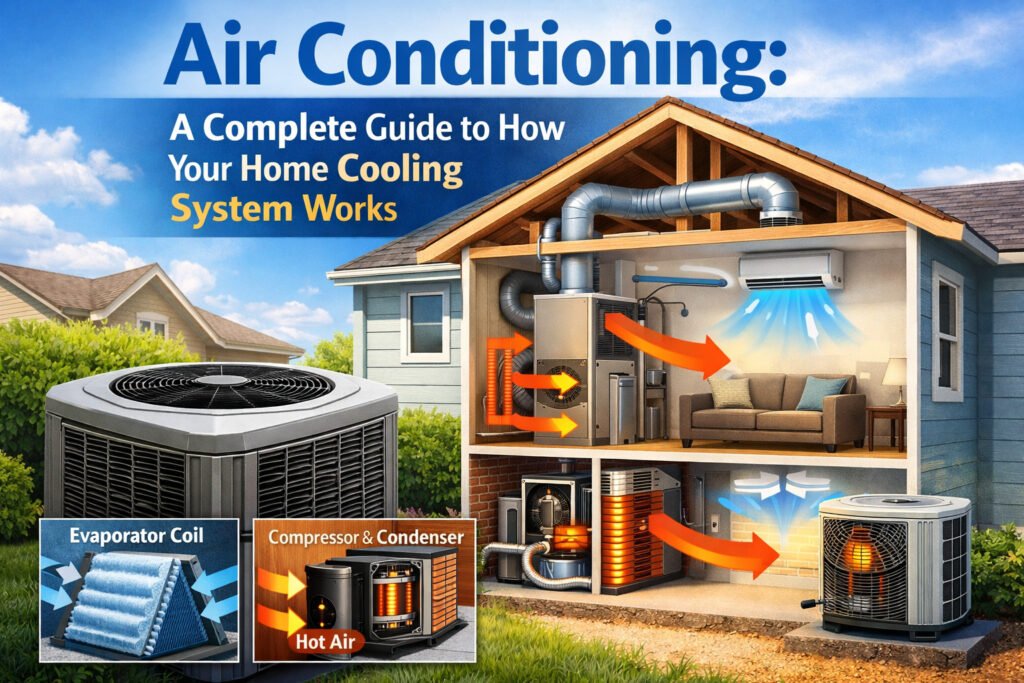
Table of Contents
Summer heat can make your home feel like an oven, but understanding how air conditioning works at home can help you stay cool and comfortable while saving money on energy bills. Your air conditioning system is more than just a box that blows cold air – it’s a complex machine that moves heat from inside your home to the outside, creating the perfect indoor climate year-round.
What Is Air Conditioning?
Air conditioning is a system that controls the temperature, humidity, and air quality in your home. Most people think air conditioning just makes cold air, but that’s not exactly right. Your air conditioning system actually removes heat and moisture from the air inside your house and moves it outside.
The basic idea behind air conditioning is heat transfer. Heat naturally moves from warm areas to cooler areas. Your air conditioning system speeds up this process by using special chemicals called refrigerants that can easily change from liquid to gas and back again.
When you set your thermostat to a cooler temperature, your air conditioning system starts working to remove heat from your home’s air. The system keeps running until the indoor temperature matches what you’ve set on your thermostat.
How Does Air Conditioning Work?
Understanding how air conditioning works at home starts with knowing that your system has two main parts: an indoor unit and an outdoor unit. These work together to move heat from inside your house to outside.
The indoor unit contains an evaporator coil that gets very cold. When warm air from your house blows over this cold coil, the heat from the air transfers to the refrigerant inside the coil. This makes the air cooler, and a fan blows this cooler air back into your home through your air ducts.
Meanwhile, the outdoor unit contains a compressor and a condenser coil. The refrigerant, now heated up from absorbing heat inside your house, travels to the outdoor unit. Here, the compressor pressurizes the refrigerant, making it even hotter. This super-hot refrigerant flows through the condenser coil, where a fan blows outdoor air over it. The heat transfers from the refrigerant to the outside air, cooling the refrigerant back down.
This process happens over and over again, constantly moving heat from inside your home to outside. That’s why you feel hot air blowing out of the outdoor unit – it’s the heat that was removed from inside your house.
Key Components of Your Home Air Conditioning System
Evaporator Coil
The evaporator coil sits inside your home, usually in the air handler or furnace. This coil contains cold refrigerant that absorbs heat from your home’s air. As warm air passes over the coil, moisture also condenses on it, which helps reduce humidity in your home.
Condenser Coil
Located in the outdoor unit, the condenser coil releases the heat that was absorbed from inside your home. A fan blows air over this coil to help transfer heat to the outside air.
Compressor
The compressor is the heart of your air conditioning system. It pressurizes the refrigerant and pumps it through the system. When refrigerant is compressed, it gets very hot, which helps it release heat more effectively in the condenser coil.
Refrigerant Lines
These copper pipes connect the indoor and outdoor units. They carry refrigerant back and forth between the evaporator and condenser coils. The larger line carries cold, low-pressure refrigerant to the indoor unit, while the smaller line carries hot, high-pressure refrigerant to the outdoor unit.
Air Handler and Ductwork
The air handler contains a fan that circulates air through your home. It pulls warm air from your living spaces, passes it over the cold evaporator coil, then pushes the cooled air back through your ductwork to different rooms in your house.
Thermostat
Your thermostat is the control center for your air conditioning system. It monitors the temperature in your home and tells the system when to turn on and off to maintain your desired temperature.
Different Types of Air Conditioning Systems
Central Air Conditioning
Central air conditioning is the most common type in larger homes. It uses a network of ducts to distribute cooled air throughout your house from one central location. The indoor unit is usually located in a basement, attic, or utility closet, while the outdoor unit sits outside your home.
Central air conditioning works well for cooling entire homes evenly. However, it can be less efficient if you only want to cool certain rooms, since it cools the whole house at once.
Ductless Mini-Split Systems
Ductless systems have an outdoor unit connected to one or more indoor units mounted on walls or ceilings. These systems don’t need ductwork, making them perfect for homes without existing ducts or for adding cooling to specific rooms.
Each indoor unit can be controlled separately, so you can set different temperatures in different rooms. This makes ductless systems very energy efficient since you only cool the rooms you’re using.
Window Air Conditioners
Window units are self-contained air conditioning systems that fit in a window opening. They’re perfect for cooling single rooms and are much less expensive than central systems. However, they’re not practical for cooling large homes and can be noisy.
Portable Air Conditioners
Portable units sit on the floor and vent hot air outside through a window kit. They’re easy to move from room to room but are generally less efficient than other types of air conditioning systems.
The Refrigeration Cycle Explained
The refrigeration cycle is the process that makes air conditioning possible. Understanding this cycle helps you see how your system moves heat from inside your home to outside.
Step 1: Evaporation
Cold, low-pressure refrigerant enters the evaporator coil inside your home. As warm air from your house blows over the coil, the refrigerant absorbs heat and changes from a liquid to a gas. This process is called evaporation, and it’s what cools the air in your home.
Step 2: Compression
The refrigerant gas travels through the refrigerant line to the compressor in the outdoor unit. The compressor squeezes the refrigerant, increasing its pressure and temperature significantly. This hot, high-pressure gas then moves to the condenser coil.
Step 3: Condensation
In the condenser coil, the hot refrigerant gas releases its heat to the outside air. As it cools down, the refrigerant changes back from a gas to a liquid. A fan helps this process by blowing outside air over the condenser coil.
Step 4: Expansion
The cooled liquid refrigerant passes through an expansion valve, which reduces its pressure and temperature. This cold, low-pressure liquid refrigerant then returns to the evaporator coil, and the cycle starts over again.
This cycle continues as long as your air conditioning system is running, constantly moving heat from inside your home to outside.
Energy Efficiency and Your Air Conditioning System
Energy efficiency is important for keeping your electric bills low and reducing environmental impact. Several factors affect how efficiently your air conditioning system works.
SEER Rating
The Seasonal Energy Efficiency Ratio (SEER) measures how efficiently an air conditioning system uses electricity. Higher SEER ratings mean better efficiency. Modern systems typically have SEER ratings between 13 and 25, with higher numbers being more efficient.
Proper Sizing
Your air conditioning system needs to be the right size for your home. A system that’s too small will run constantly trying to cool your home, wasting energy and wearing out faster. A system that’s too large will cycle on and off frequently, which is also inefficient and doesn’t remove humidity well.
Insulation and Air Sealing
Good insulation and sealed air leaks help your air conditioning system work more efficiently. When your home is well-insulated, less heat enters from outside, so your system doesn’t have to work as hard to keep you cool.
Regular Maintenance
Clean air filters, coils, and properly functioning components help your air conditioning system run efficiently. Dirty components make the system work harder, using more energy to achieve the same cooling.
Common Air Conditioning Problems
System Won’t Turn On
If your air conditioning won’t start, check your thermostat settings first. Make sure it’s set to “cool” and the temperature is set lower than the current room temperature. Also check your circuit breakers to make sure power is getting to the system.
Not Cooling Enough
When your air conditioning runs but doesn’t cool your home adequately, several issues could be the cause. Dirty air filters block airflow, making the system less effective. Low refrigerant levels, dirty coils, or ductwork problems can also reduce cooling performance.
Short Cycling
Short cycling happens when your air conditioning turns on and off frequently without running for normal periods. This can be caused by an oversized system, thermostat problems, or restricted airflow from dirty filters or blocked vents.
High Humidity
If your home feels muggy even when the air conditioning is running, your system might not be removing enough moisture from the air. This can happen when the system is too large, refrigerant levels are low, or airflow is restricted.
Strange Noises
Unusual sounds from your air conditioning system often indicate mechanical problems. Grinding noises might mean motor problems, while rattling could indicate loose parts. Squealing sounds often come from worn belts or bearings.
Ice Formation
Ice on your evaporator coil or refrigerant lines usually means restricted airflow or low refrigerant levels. Never try to chip ice off the coils – turn off the system and let it thaw completely before investigating the cause.
Maintenance Tips for Better Performance
Regular maintenance keeps your air conditioning system running efficiently and helps prevent expensive repairs.
Change Air Filters Regularly
Air filters should be changed every 1-3 months, depending on the type of filter and how much your system runs. Dirty filters restrict airflow, making your system work harder and reducing its efficiency. They also allow dust and dirt to build up on system components.
Keep Outdoor Unit Clean
Remove leaves, grass clippings, and other debris from around your outdoor unit. Trim plants so there’s at least two feet of clear space around the unit for proper airflow. Gently clean the condenser coil fins with a garden hose if they’re dirty.
Clean Air Vents and Registers
Vacuum dust from your air vents and registers monthly. Make sure furniture, curtains, or other objects aren’t blocking airflow to and from vents. Good airflow is essential for efficient operation.
Check and Clean Drain Lines
Your air conditioning system produces condensation that drains away through a drain line. If this line gets clogged, water can back up and damage your system or home. Pour a cup of bleach down the drain line every few months to prevent algae and mold growth.
Schedule Professional Maintenance
Have a qualified technician inspect and service your air conditioning system annually. Professional maintenance includes checking refrigerant levels, cleaning coils, lubricating moving parts, and testing system operation.
When to Call a Professional
While you can handle basic maintenance like changing filters and cleaning vents, some air conditioning problems require professional attention.
Refrigerant Issues
Low refrigerant levels indicate a leak in your system. Adding refrigerant without fixing the leak is wasteful and potentially harmful to the environment. EPA regulations require licensed technicians to handle refrigerant.
Electrical Problems
Air conditioning systems use high-voltage electricity that can be dangerous. If you suspect electrical problems, turn off power to the system and call a professional technician.
Major Component Failure
Problems with the compressor, evaporator coil, or condenser coil usually require professional repair or replacement. These components are expensive and require specialized knowledge to service safely.
Installation and Replacement
Installing or replacing air conditioning equipment requires proper sizing calculations, refrigerant handling certification, and knowledge of local building codes. Professional installation ensures your system works efficiently and safely.
Cost Considerations
Understanding the costs associated with air conditioning helps you make informed decisions about your home cooling needs.
Initial Purchase and Installation
Central air conditioning systems typically cost between $3,000 and $7,000 installed, depending on the size and efficiency of the system. Higher-efficiency systems cost more initially but save money on energy bills over time.
Operating Costs
Air conditioning can account for 50-70% of your summer electric bill. More efficient systems use less electricity, saving you money every month. Proper maintenance and good home insulation also help reduce operating costs.
Repair Costs
Minor repairs like replacing a fan motor or fixing a refrigerant leak typically cost $200-$600. Major repairs involving the compressor or evaporator coil can cost $1,000-$2,500. Regular maintenance helps prevent expensive repairs.
Replacement Timing
Most air conditioning systems last 12-15 years with proper maintenance. If your system is over 10 years old and needs major repairs, replacement might be more cost-effective than repair, especially if you can choose a more efficient model.
Understanding how air conditioning works at home helps you make better decisions about system maintenance, repairs, and upgrades. Your air conditioning system is a significant investment that affects your comfort and energy costs for many years. By learning how it works and taking good care of it, you can stay cool and comfortable while keeping your energy bills under control.
Ready to optimize your air conditioning system? Start by changing your air filter and scheduling professional maintenance. Your wallet and your comfort will thank you for taking better care of your home’s cooling system.