

Popular:
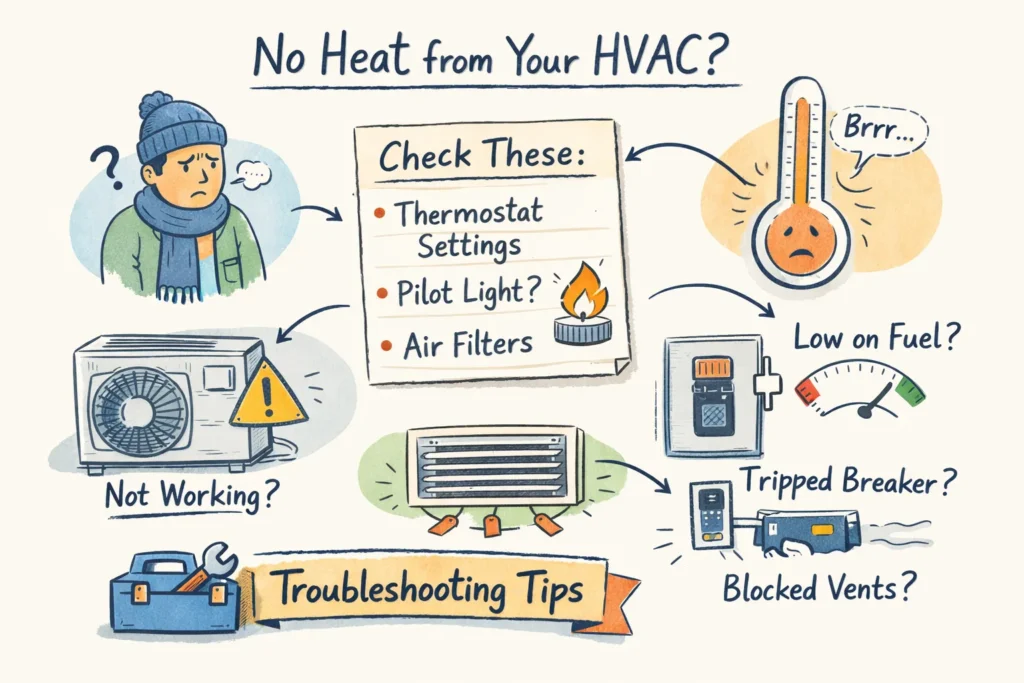
Table of Contents
Why is my HVAC not heating? When the system runs but rooms stay cold, common causes include a clogged air filter, a thermostat that isn’t calling for heat, or an electrical fault that keeps the blower running without producing warmth. Start with these seven troubleshooting tips, beginning with simple safety checks and basic DIY fixes to avoid an unnecessary service call. Fix problems quickly, since many issues worsen and cost more the longer they go unaddressed.
Quick summary
- Check controls and power: confirm the thermostat is set to heat, raise the setpoint ~5°F, replace weak batteries, and verify breakers and the furnace service switch.
- Restore basic airflow: change a dirty filter and open supply and return registers so air can move freely.
- Inspect ducts and distribution: check returns, vents, dampers, and visible ductwork for blockages, crushed runs, or leaks and seal or move obstructions if safe to do so.
- Verify ignition and safety components: check pilots, ignitors, flame sensors, and limit switches and do not attempt major combustion repairs yourself.
- Check heat-pump and refrigerant signs: look for ice on the outdoor coil, hissing at refrigerant lines, or sustained cool airflow during heating mode.
- Assess mechanical and electrical parts: listen for blower or motor noises, inspect capacitors and belts visually, and photograph control-board LED codes for a technician.
- Call a professional for urgent or complex issues: gas smells, electrical faults, refrigerant repairs, repeated flame failures, or persistent no-heat after basic checks.
Start here: quick safety checks and DIY fixes
Start at the thermostat and basic controls. Make sure the system mode is set to heat, raise the setpoint a few degrees, and replace weak batteries. For smart thermostats, confirm the display has power and check visible wiring at the base only if you are comfortable; if the thermostat does not call for heat, address the control issue before moving deeper into diagnostics.
Next, confirm power at the breaker panel and at the unit. Inspect breakers, the furnace service switch, and the control board fuse. If breakers trip repeatedly or you smell burning, stop and call a technician because electrical faults are unsafe to troubleshoot at home. After the power checks, restore airflow by replacing a dirty filter, opening registers, and feeling for warm air at the vents.
Thermostat, power, and airflow checks resolve many common no-heat situations and keep you safe while troubleshooting. If those steps do not restore heat, read on for guidance on airflow distribution, ignition and safety components, refrigerant and heat-pump issues, and mechanical or electrical faults, plus when to call a professional.
Airflow and distribution: why warm air isn’t reaching rooms
Cold rooms or weak flow at specific registers usually point to restricted airflow rather than a failed heat source. Replace the air filter and make sure supply registers and return grilles are open and unobstructed. Check for furniture, curtains, or rugs blocking returns, and move them if needed. If supply vents barely feel warmer than room air despite the blower running, suspect duct restrictions, a coated coil, or a partially closed damper. For an easy-to-follow list of common airflow and distribution problems, see the 7 reasons your HVAC is not blowing warm air.
Inspect visible ductwork for crushed sections, loose joints, or disconnected runs and feel for air escaping around seams. Small leaks can be temporarily sealed with foil tape to test whether sealing helps, but significant gaps, missing insulation, or major damage should be repaired professionally. If cold spots persist after these fixes, the ducts may be undersized or unbalanced and should be tested and rebalanced by a technician using pressure and airflow tools. If airflow fixes do not stop uneven temperatures, return to thermostat and control checks because control problems can mimic distribution issues.
Furnace ignition and safety controls to check next
Check the ignition system when the furnace runs but does not produce heat. Older gas furnaces use a standing pilot that can be relit following the manufacturer’s instructions, while modern units have an electronic ignitor or hot-surface igniter that can fail without obvious signs. If the burners do not light but the blower runs, the problem is likely an ignition or fuel-supply issue that needs narrowing down. Avoid disassembling combustion parts beyond relighting a pilot or simple cleaning unless you are trained to work on gas appliances.
A dirty flame sensor often lets the burners light briefly and then shuts the gas off, leaving the system to run without heat. Carefully clean the flame sensor with fine emery cloth or a non-abrasive pad and then check the burners for an even mostly blue flame; yellow or sooting flames indicate combustion issues that require professional attention. Do not attempt major combustion repairs yourself. If cleaning does not fix the problem, schedule a technician visit. If you do require replacement of an ignitor, review typical costs to replace a furnace ignitor before you get estimates so you can compare quotes fairly.
Repeated short cycles often point to a tripped high-limit switch, a blocked heat exchanger, or restricted airflow. Do not repeatedly reset limit switches without diagnosing the cause because that hides a safety problem. If you smell gas or observe unstable flames, leave the building and call a licensed technician immediately.
Heat pump and refrigerant problems that cause cold air
With heat pumps, low refrigerant or a sealed-system fault commonly results in cool air instead of heat. Look for ice on the outdoor coil, hissing near refrigerant lines, or a sharp drop in heating performance. These signs usually indicate a refrigerant leak and require certified service to locate the leak, repair it, and restore the correct charge. Do not add refrigerant yourself because certified handling and proper leak repair are required by law and by safe long-term operation.
Heat pumps run periodic defrost cycles that temporarily reverse flow and can blow cooler air for a few minutes; a short blast of cool air during defrost is normal. If the unit stays cold for longer periods, or if the outdoor fan or compressor fails to run in heat mode, suspect a reversing valve, control circuit, or compressor issue. Note when the pattern happens and the outdoor temperature, because recording these details helps a technician diagnose the problem faster. Share those notes with the contractor to avoid unnecessary parts replacement.
Refrigerant diagnosis and repair require pressure and temperature readings, leak detection tools, vacuum pumps, and certified refrigerant handling. Schedule a licensed HVAC contractor to test pressures, find leaks, and restore the correct charge to avoid poor fixes, fines, and ongoing inefficiency. For a step-by-step approach to system troubleshooting and diagnostics you can reference before the technician arrives, consult this HVAC system troubleshooting steps guide. Keep records of symptoms and any visible signs to speed the service visit. If a contractor finds a leak, get the estimated cost and a recommended repair plan before authorizing work.
Mechanical and electrical failures: blower, motors and controls
If the blower runs but warm air is weak or absent, inspect the air handler for mechanical issues. Humming without rotation, grinding, squeals, or rattles suggest a failing motor, worn bearings, or a seized blower wheel. Any burning odor is a red flag; shut the system down and call a technician because electrical overheating can be dangerous. Avoid running the unit in that condition to prevent further damage.
Start and run capacitors, belts, and bearings wear over time and often show visible clues before failing. A failing capacitor can cause slow starts, repeated breaker trips, or a bulging or leaking case. Belts on older units can fray or crack and should be replaced when worn. Power down the unit before touching components, and call a professional if you see bulging, oil leakage, or other damage.
Control boards and fuses speed diagnostics when you capture the right information for your technician. Photograph any diagnostic LED flash codes, note the flash sequence and timing, record the unit make and model, and list breakers or switches you reset. Those records shorten diagnostic time and help the technician prioritize repairs. Sharing clear notes and photos can lower repair costs and reduce phone calls during troubleshooting.
Prioritize repairs and when to call a professional
Treat a gas smell, repeated flame failure, or a complete loss of power during freezing weather as urgent. If you detect gas, leave the building immediately and call emergency service; do not try to relight pilots or operate electrical panels. When the problem affects only a few cold rooms and the rest of the building heats normally, schedule a next-day visit with a licensed technician and avoid running the system in a compromised state. For intermittent or minor temperature drops, continue basic troubleshooting while arranging service.
Use these rough cost ranges to plan your budget and schedule. Parts and labor vary by region and system access, so get written estimates from licensed technicians and compare the scope of work before authorizing repairs.
- Thermostat replacement: $120 to $400, usually under an hour.
- Ignitor replacement: $150 to $300, generally under two hours.
- Blower motor repair or replacement: $200 to $900, a few hours on site.
- Refrigerant leak diagnosis and repair: $200 to $1,500+, time varies with access.
- Duct repair: $500 to $2,000, depending on scope and accessibility.
What to tell your technician before they arrive: have the unit make, model, and serial number ready, describe exact symptoms and any error codes or LED flash patterns, and list the DIY steps you already tried. Photograph indoor and outdoor units, wiring labels, and the control board to speed remote triage. These details shorten diagnostic time and help you get accurate written estimates from licensed technicians or through HVAC FAQ Hub. If you need to reach us directly for help finding a contractor, use the HVAC FAQ Hub contact page to submit details and photos before the visit.
Why is my HVAC not heating: quick next steps
If your HVAC will not heat, take these immediate actions: set the thermostat to heat and raise it about 5°F, confirm the breaker and furnace service switch are on, and replace a dirty filter. Check vents and returns to ensure they are open and unobstructed and listen for unusual fan noise that suggests airflow problems. For additional reading on common no-heat causes and next steps, see this article outlining the top reasons a system produces no heat.
For more troubleshooting guides and HVAC advice, visit our Blog | HVAC FAQ Hub for articles that walk through common failures, safety checks, and when to call a pro.